founded in 1986
NEWS
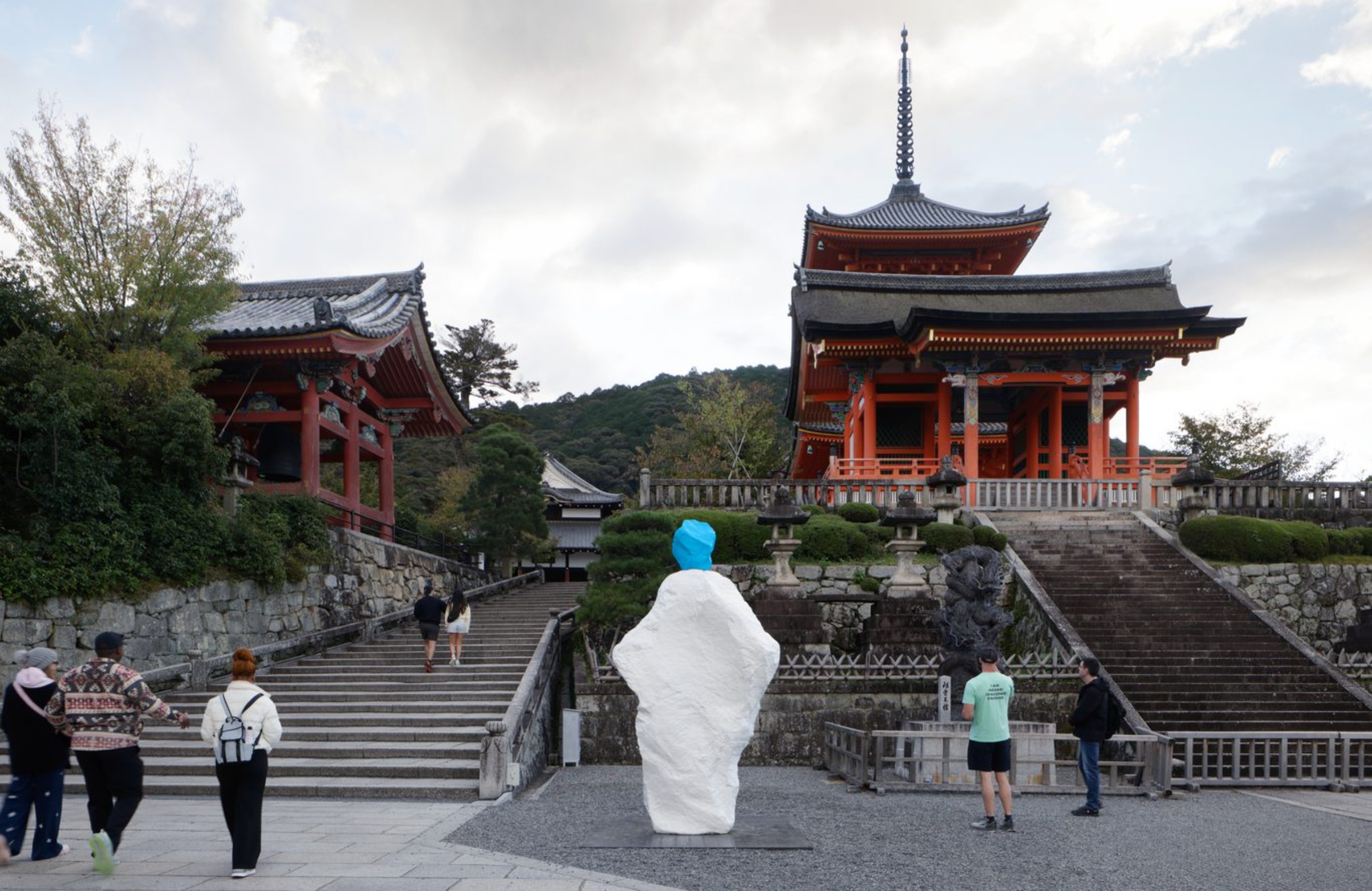
Ugo Rondinone, Shaping silence - Kiyomizu-dera Temple, Kyoto
Ugo Rondinone, Shaping silence - Kiyomizu-dera Temple, Kyoto
27.10.2026 - 12.11.2026
Ugo Rondinone
Shaping Silence
The exhibition shaping silence brings together a presentation of works by Ugo Rondinone at Kiyomizu-dera Temple in Kyoto, marking the artist’s first solo exhibition in Japan.
The exhibition unfolds across different areas of the historic temple complex, including Jōju-in, a historic sub-temple overlooking its celebrated Moon Garden. The presentation brings together seventeen stone figure sculptures, a bronze monk sculpture, and a sun painting, establishing a dialogue with the architecture, gardens, and spiritual atmosphere of the site.
Throughout his career, Rondinone has approached nature not merely as a landscape, but as a condition through which to explore consciousness, spirituality, and the relationship between the human body and the vastness of time and space. Drawing upon elemental forms and recurring symbols, his practice moves between the natural and the metaphysical, creating works that invite contemplation on existence, transformation, and the passage of time.
At the entrance to the temple, near the historic Sai-mon, a blue-and-white bronze monk stands alongside the sculpture of Seiryū, the Blue Dragon, a protective figure associated with Kannon, the bodhisattva of compassion. The contrast between the monk’s contemplative stillness and the dragon’s symbolic association with movement and transformation establishes a dialogue between different forms of spiritual presence. Elsewhere, seventeen roughly hewn bluestone figures occupy the interiors of Jōju-in, the historic sub-temple overlooking its celebrated Moon Garden. Drawing upon archaic forms and ancient stone cairns, these sculptures evoke the enduring human impulse to gather, balance, and stack stones, while recalling the inuksuk structures of Arctic Indigenous cultures. Their presence also carries a personal significance for the artist, whose father was a stonemason.
Within Jōju-in, the figures form a silent community in close relationship with the garden’s carefully arranged stones, moss, water, and surrounding landscape. Their elemental silhouettes evoke an almost primordial presence, suspended between human forms and geological structures. A further dimension of the exhibition unfolds through a red-and-black sun painting, installed in a traditional tokonoma alcove. Its concentric fields of colour radiate from a dark centre, suggesting the cyclical movement of light and darkness, and introducing a reflection on the passage of days, seasons, and human existence.
The three recurring archetypes - the monk, the stone figure, and the sun - establish a dialogue between the physical world and the inner realm of contemplation. While the stone sculptures evoke the slow duration of geological time, the sun refers to the cyclical rhythms of nature, and the monk embodies introspection and spiritual stillness. Together, they enter into a relationship with the temple’s architecture and natural surroundings, where wood, moss, water, and light become integral elements of the exhibition.
For Rondinone, the opportunity to present his first exhibition in Japan at Kiyomizu-dera holds particular significance. The temple offers a setting in which nature, architecture, and spiritual life have coexisted for centuries, allowing the works to engage with an environment shaped by generations of ritual and contemplation. Shaping silence ultimately proposes a meditation on existence, the body as a vessel of time, and stillness as a form of presence, inviting visitors to reconsider the boundaries between the external landscape and their inner world.
Image credits:
Ugo Rondinone. Courtesy the Artist and Sadie Coles HQ, London.
Photo: Takeru Koroda