founded in 1986
NEWS
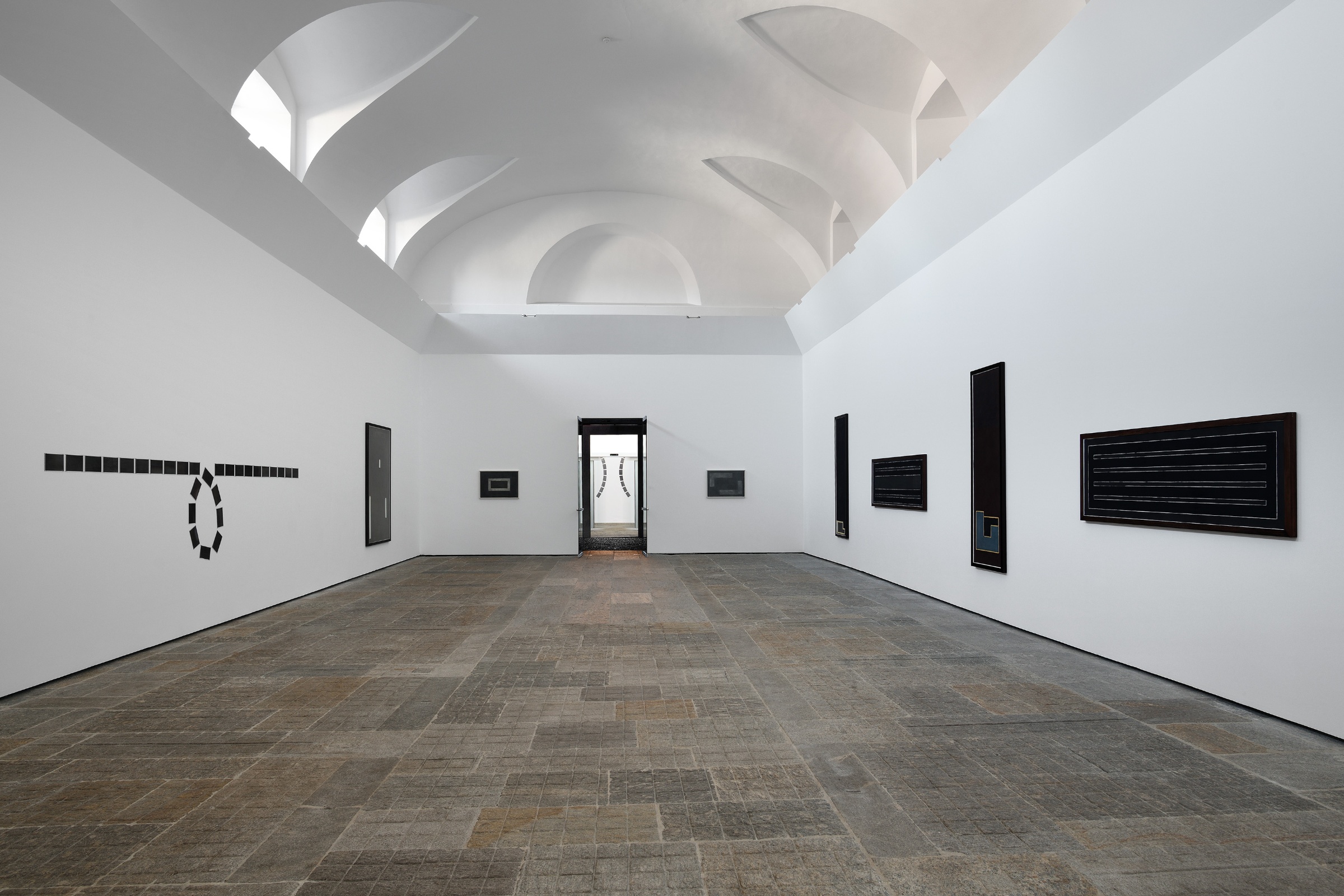
David Tremlett, David Tremlett. Somebody did Something on the Wall - Villa e Collezione Panza, Varese
David Tremlett, David Tremlett. Somebody did Something on the Wall - Villa e Collezione Panza, Varese
05.11.2026 - 07.03.2027
David Tremlett
David Tremlett, Somebody did Something on the Wall
FAI - Fondo per l’Ambiente Italiano is pleased to present David Tremlett. Somebody did Something on the Wall at Villa e Collezione Panza in Varese, an exhibition project dedicated to the work of the British artist.
The project brings together an exhibition and two new site-specific interventions conceived for the Villa, which will become part of its permanent collection. Through these complementary elements, the presentation establishes a dialogue between the history of Giuseppe Panza’s collection and the most recent developments in Tremlett’s artistic practice.
The exhibition features twenty-two works installed across the Scuderia Grande and Scuderia Piccola, tracing the evolution of the artist’s research from the works acquired by Giuseppe Panza di Biumo in the 1970s to his more recent production. Panza first became interested in Tremlett’s work when his practice was centred on graphite, drawing, and conceptual experimentation. More than fifty years later, the exhibition offers an opportunity to reconsider these early works in relation to the artist’s subsequent development.
One of the new interventions, Flip Over (2026), is conceived for the ceiling of the Villa’s bookshop, a space through which visitors regularly pass. Developed in close relation to the architecture, the wall drawing combines geometric forms in graphite with two distinct shades of yellow. Its composition draws upon the colours and proportions of the room, transforming the ceiling into an integral part of the spatial experience. The title refers both to the act of turning a page and to the positioning of the work above the viewer, bringing together the physical gesture of reading and the movement of looking upwards.
This intervention reflects a central aspect of Tremlett’s practice, in which drawing extends beyond the limits of the two-dimensional surface to become a means of engaging with architectural space. Rectangles, bands, arches, and colour fields form a vocabulary of elementary shapes, continuously adapted to the proportions, openings, and natural light of each environment. Through these interventions, walls and architectural surfaces become active components of the artwork, redefining the viewer’s perception of the surrounding space.
A distinctive element of his technique is the use of dry pastel, applied directly onto walls by hand. Through repeated gestures, the pigment settles into the surface, producing soft, textured fields of colour with a distinctive depth and intensity. Graphite also occupies an important place in his practice, maintaining a connection with his earliest experiments and providing a structural counterpart to the chromatic compositions. His palette, ranging from greys and earthy tones to yellows and burnt reds, is informed by the landscapes encountered during his travels and by the specific characteristics of the places in which he works.
For Tremlett, returning to Villa Panza carries a particular significance, bringing together personal memories and an ongoing artistic dialogue with the collection. Giuseppe Panza was among the first major European collectors to recognise his work, acquiring pieces during the formative years of his career. The new project traces a path from those early encounters to the artist’s present practice, spanning more than five decades of artistic development.
The project continues FAI’s commitment to Villa Panza as a place of artistic production and exchange, in keeping with Giuseppe Panza’s vision of collecting as an open and evolving practice. Conceived as a space in which artists could experiment and engage directly with architecture, the Villa offers a context in which Tremlett’s interventions can become part of its ongoing history, enriching the permanent collection while opening new perspectives on its spaces.
Image credits:
Tremlett, Photo Michele Alberto Sereni, courtesy Magonza